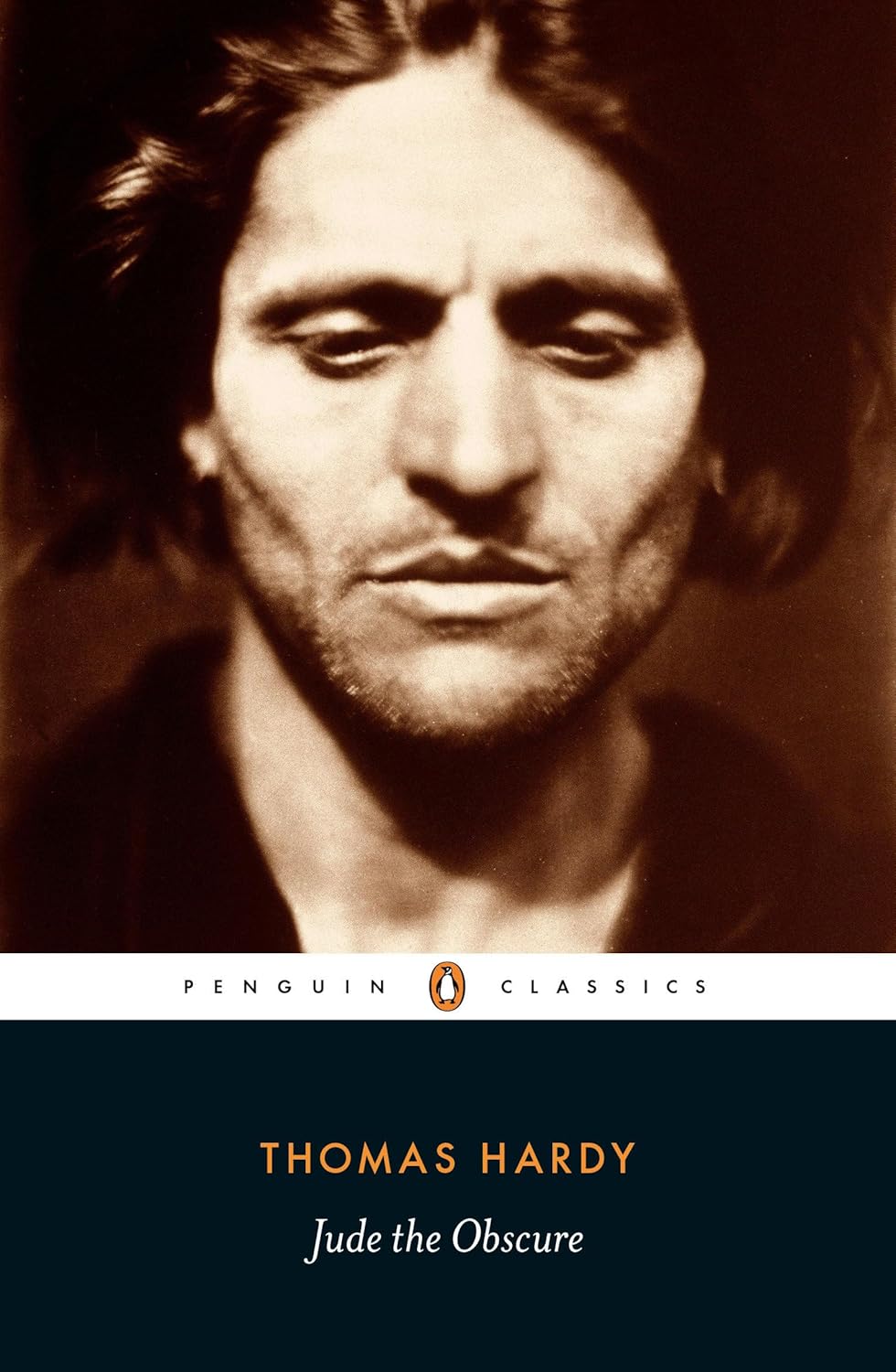
A young orphan boy by the name of Jude aspires to go to Christminster, a fancy university town, to become educated. Christminster is a thin fictionalization of Oxford, but this story being set in the late 19th century means this education would not be the infamous PPE or some STEM subject, but a much more classical education that formed a preparation for entering the Church hierarchy. Nevertheless, this is still an aspiration to entering the social elite, and, to this end, Jude devotes all his spare time and energies to the study of dead languages and ancient texts. He does not have much spare time or energies due to the demands of working country life, but he does scrape together an understanding of Greek and Latin. Unfortunately, a combination of romantic misadventure and matrimonial entanglements soon leads him astray. While he makes the very practical decision to train as a stonemason in order to support himself, he badly underestimated exactly how impractical his goal of becoming an Oxford man really is. All of life from this point becomes a series of struggle and dashed hopes.
Given enough time, all contemporary novels become historical novels, and all effective historical novels end up reading like science fiction. The society the reader is landed in has its own strange values and culture that must be deduced and decoded. In both familiarity and difference, the past can prove an effective mirror to the present. But a novel is more than a satire. It has characters that play to our sympathies. There is melodrama and a trajectory of hopes and frustration. How legible does the human story remain after more than a century?
Let my answer that question in terms that the kids today might understand. Jude’s earnest desire to go to Oxford is highly hashtag-relatable, but his relationships with women will give more than a few readers “the ick”. The central romance of the novel is between Jude and his cousin, which seems like a deal-breaker. (Skimming some biographical background to the novel, it seems that Hardy was revealing a little of his own lore here). At no point do the pair seem remotely shippable. There is a toxic vibe about Jude’s possessive instinct, though the possessive instincts run through so many of the characters, both husbands and also wives.
Despite all this, the story does still work. The characters are as compelling and in their own ways mysterious as I am sure they were to Hardy’s first readers. Arabella, Jude’s first wife, might read to some as a misogynistic caricature, but to my eyes it is her unsympathetic qualities that make her so interesting. Most of all, the oppressive quality of marriage as an institution in this distant, alien society is inescapable, and remains the most powerful effect of the novel. Despite all misgivings about Jude, by the end there is no disputing the tragedy which he has suffered.